



Pacojet FAQ – Operation, Accessories, Cleaning & Service

What is a Pacojet?
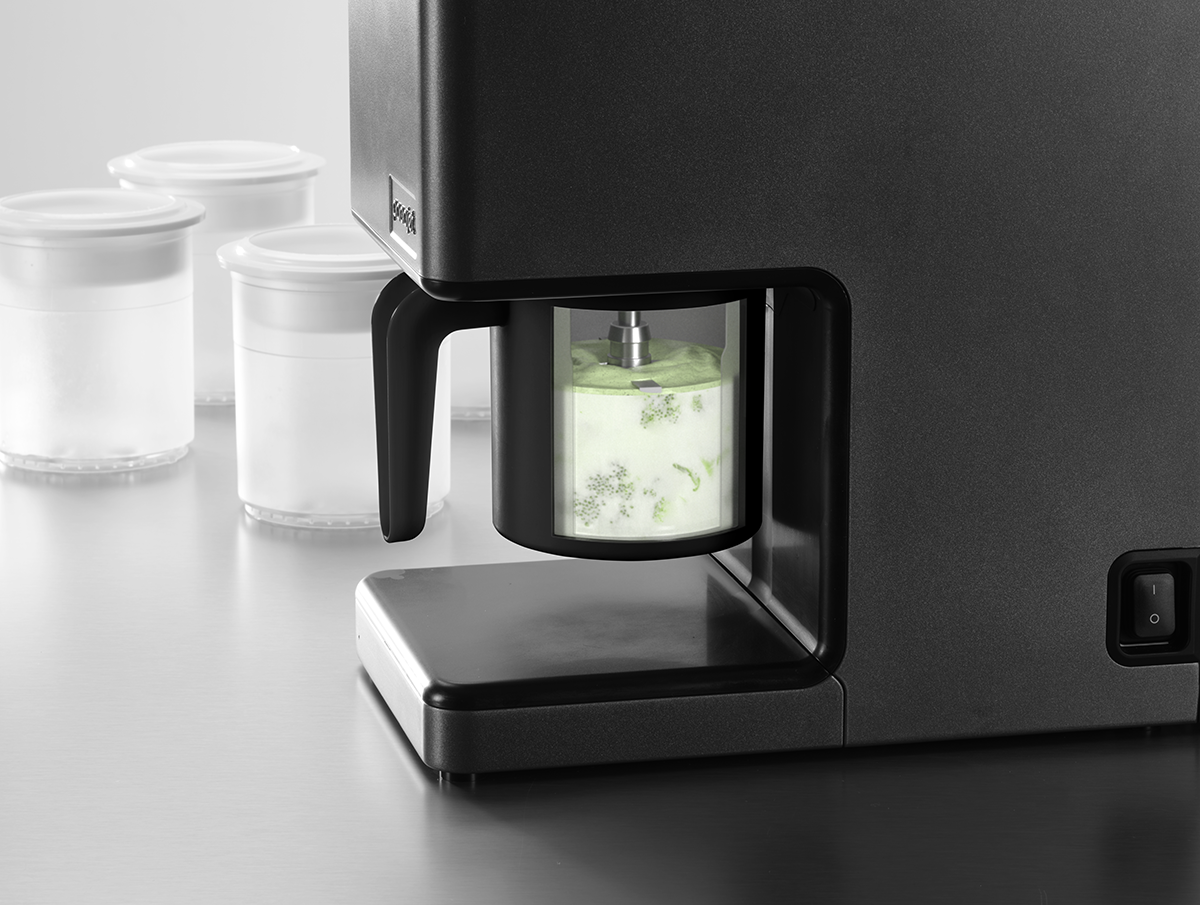
Pacojet is a professional kitchen appliance that processes deep-frozen food preparations into exceptionally fine textures without thawing them first. This process is called pacotizing®. It can be used to make sorbets, ice creams, purées, mousses and farces, for example. Pacojet enables professional kitchens to prepare recipes in advance and process individual portions as needed.
What does “pacotizing®” mean?
Pacotizing® means micro-puréeing freshly prepared, deep-frozen foods without thawing. The ingredients are processed into an exceptionally fine, homogeneous texture without prior blending or straining.
What can you make with a Pacojet besides ice cream and sorbet?
Pacojet can also be used for many savory preparations, including vegetable purées, soups, sauces, herb pastes, spreads, and fish or meat forcemeats. Applications range from starters and desserts to drinks. The appropriate processing method and appliance settings depend on the recipe.
How is a Pacojet different from a blender?
The main difference is the processing method: when pacotizing®, Pacojet processes a preparation frozen in a pacotizing® beaker into a very fine, homogeneous texture without thawing it. It can process individual portions. With the separately available Coupe Set Pacojet 4, the Pacojet 4 can also chop, mince, purée or whip non-frozen foods.
Is a Pacojet worthwhile for smaller foodservice business?
Pacojet can also be useful for smaller foodservice businesses if suitable preparations feature regularly on the menu. Key considerations include frequency of use, quantities required and integration into kitchen workflows. When deciding whether to purchase, compare the cost of the appliance, accessories, cleaning and maintenance with potential savings in labor time and ingredient costs. A product demo can help assess its suitability for your business.
Do I always have to process the entire pacotizing® beaker?
No. With the Pacojet 4, you can process the number of portions you need without pacotizing® the entire beaker. This allows you to prepare recipes in advance and serve portions on demand. Follow the instructions in the relevant operating manual when handling the remaining contents.
How can Pacojet help reduce food waste?
Pacojet can help reduce overproduction because prepared recipes can be processed in portions as needed. Suitable ingredients and edible trimmings can also be used in recipes such as purées, soups and pastes. The actual amount of food waste avoided depends on menu planning, recipes and kitchen workflows.
What does my kitchen need to use a Pacojet?
In addition to a suitable location and power supply, pacotizing® requires sufficient freezer capacity and compatible pacotizing® beakers. Allow time for preparation: according to the application instructions, filled beakers must be frozen at −20 °C for at least 24 hours until the contents are completely frozen. Refer to the operating manual for your model for exact installation and operating conditions.
Can I try Pacojet at a product demo before buying?
Yes. You can request a product demo to get to know Pacojet and its applications. Use the dealer locator to find a contact in your region. Discuss the recipes and kitchen processes most relevant to you in advance so you can assess the possibilities for your business.
How do I fill the pacotizing® beaker?
Fill the pacotizing® beaker with the ingredients to be processed. If there are gaps, fill them with liquid up to the maximum fill mark so that the surface of the contents is flat and smooth.
What should I consider when freezing my pacotizing® beakers?
Place filled pacotizing® beakers in the freezer at −20 °C for at least 24 hours until the contents are completely frozen. Contents colder than −23 °C may overload the appliance; insufficiently frozen contents may affect the result.
Can I insert an already frozen, beaker-shaped preparation into a pacotizing® beaker afterward?
No. Ready-made, deep-frozen preparations in beaker form must not be inserted afterward, as this may damage the appliance.
What should I keep in mind when pacotizing®?
Smooth the surface of the contents of the pacotizing® beaker before freezing. If pieces of fruit or vegetables rise during freezing, cover them with liquid again and refreeze before processing.
How do I attach the pacotizing® blade correctly?
Insert the pacotizing® blade into the spray guard with its preliminary scraper, then attach the assembly to the blade holder. You should hear a click when it is correctly fitted. Consult the operating manual for illustrations and details.
What does “number of automatic repetitions” mean?
The programmable repeat function on the Pacojet 4 and Pacojet 2 PLUS allows a recipe to be pacotized® several times as needed. Depending on the recipe, this can further affect mixing, consistency, stability and color.
What do “overpressure/normal pressure” mean?
Depending on the setting, Pacojet operates with overpressure or normal pressure. Overpressure incorporates more air into the preparation and can produce creamy, airy results. Normal pressure produces denser results, for example firmer sorbet quenelles.
What is the Jet®-mode on the Pacojet 4?
The Pacojet 4 lets you choose between classic pacotizing® mode and Jet®-mode. Certain recipes with a high fat or sugar content, such as ice creams, can be processed in 90 seconds using Jet®-mode.
How many recipe settings can be saved with the Pacojet 4 favorites function?
Up to 20 recipe settings can be saved on the Pacojet 4.
Which recipes can benefit from multiple repetitions?
Multiple repetitions can be used for recipes requiring an especially fine texture, such as hummus, nut pastes or vegetable purées.
What is the Coupe Set?
The Coupe Set knife and whipping disk can be used to cut, chop, purée, whip, foam or mix non-frozen foods.
Can the Pacojet Coupe Set PLUS be used with the Pacojet 4?
No. The Pacojet Coupe Set PLUS is compatible only with the Pacojet 2 PLUS. The Coupe Set Pacojet 4 is available for the Pacojet 4.
Can the Coupe Set Pacojet 4 be used with the Pacojet 2 PLUS?
No. The Coupe Set Pacojet 4 is compatible only with the Pacojet 4.
What does “chopping/cutting” mean?
The Coupe Set extends the Pacojet’s applications to chopping, cutting, whipping and mixing. It can process fresh ingredients for dishes such as tartare, purées or sauces.
What does “whipping” mean?
The whipping disk in the Pacojet Coupe Set is designed for mixing, stirring and whipping. For example, it can be used to make whipped cream preparations with fruit.
How do I clean my Pacojet before using it for the first time?
Wipe the housing with a damp cloth, thoroughly clean the pacotizing® beakers and accessories, then run a complete cleaning cycle as described in the operating manual.
How do I clean my Pacojet during regular operation?
Clean Pacojet at the end of the working day and after extended periods of non-use. Run a rinsing cycle between different food preparations. Use Pacojet cleaning tabs or a suitable non-foaming, disinfecting cleaning agent for cleaning.
How often should Pacojet be serviced?
Servicing by a Pacojet service partner is recommended once a year or after 20,000 portions.
How can I check whether my pacotizing® blade is still in good condition?
The pacotizing® blade should rock back and forth on a flat surface. If it rests on one side, it may be bent. Also check the cutting edge for nicks.
Can I sharpen a worn pacotizing® blade myself?
No. A worn pacotizing® blade should be replaced to avoid damaging the appliance.
How can I tell the different protective beakers apart?
Protective outer beakers vary depending on the model and the material of the pacotizing® beaker. The compatible pacotizing® beaker is indicated on each protective beaker. Refer to the accessories overview to identify the correct combination.
What happens if I use the wrong combination of pacotizing® beaker and protective beaker?
Improper use may damage the appliance. Always use the protective beaker intended for the respective pacotizing® beaker.
Can the Pacojet 4 pacotizing® blade be used with older Pacojet models?
The Pacojet 4 pacotizing® blade is also compatible with the Pacojet 2 PLUS. For the Pacojet 1, Pacojet 2 and Pacojet Junior, a pacotizing® blade upgrade is required first. This involves replacing the tool coupling to make the appliance compatible with the Pacojet 4 pacotizing® blade. Contact your Pacojet service partner.